We’re often brought in during audits, refinancing, or major reviews — moments where precision matters. When it comes to valuing plant and equipment, accuracy begins with understanding not just what an asset is worth, but why — and under what assumptions.
This guide breaks down the core principles behind plant and equipment valuation, guided by IVS 300 — the International Valuation Standard for Plant, Equipment and Infrastructure. Where the valuation is being undertaken in an Australian context, the applicable accounting standards (AASB 116, AASB 13) and professional standards (APES 225) also play an important role.
A note for Australian readers:
IVS 300 provides the valuation methodology framework. AASB 116 prescribes the accounting treatment for property, plant and equipment. AASB 13 defines fair value and its measurement hierarchy. APES 225 governs the professional and ethical obligations of valuers performing valuation services.
What is plant and equipment?
Items of plant and equipment are tangible assets that are held by an entity for use in the production or supply of goods or services, for rental by others or for administrative purposes, and that are expected to be used over a period of time. The right to use an item of plant and equipment — such as a right arising from a lease — would also follow the requirements of this standard.
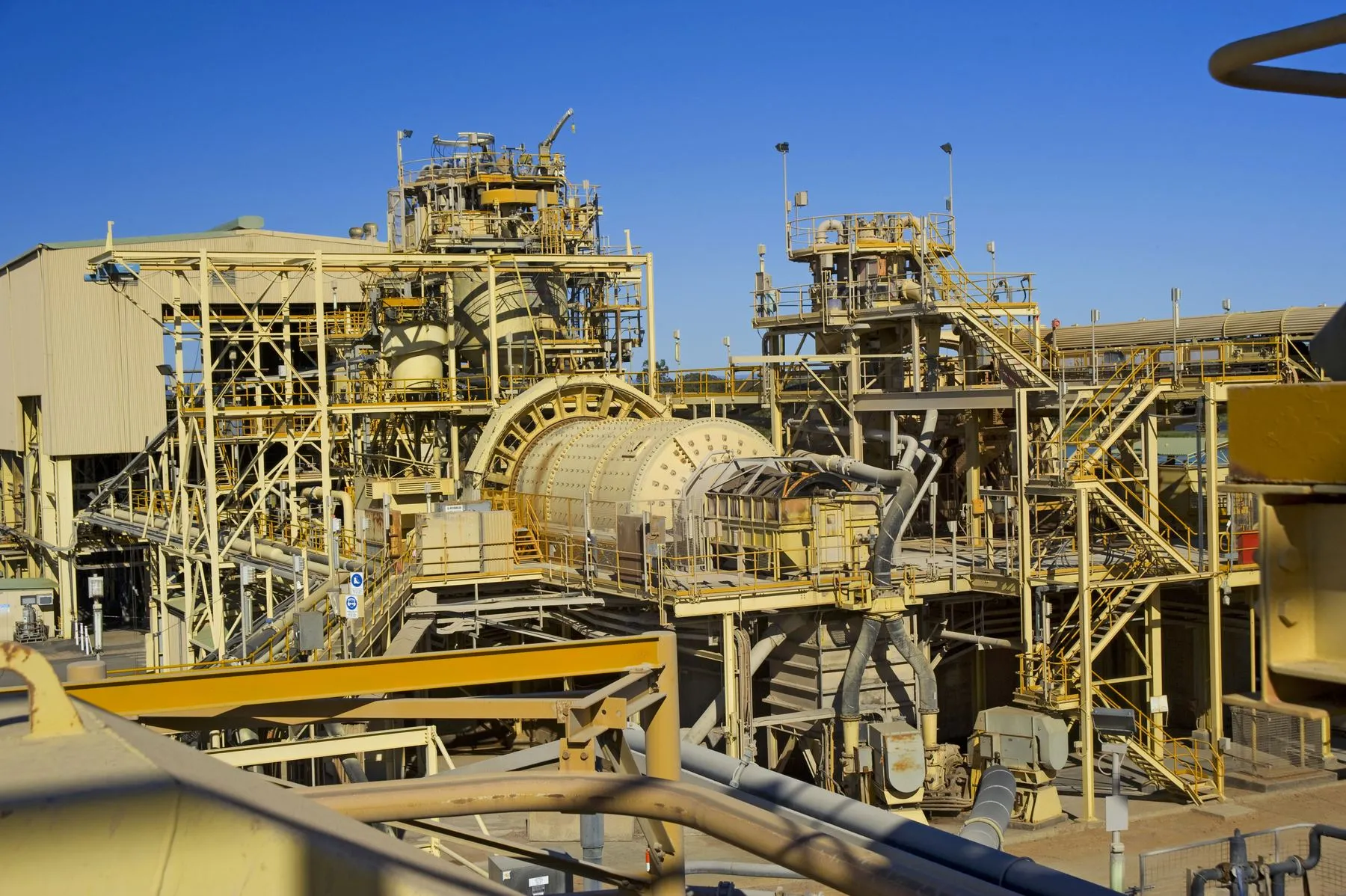
These assets include everything from earthmovers and CNC machines to conveyor systems, processing plants, and specialised tools. Assessing their value requires more than looking at resale prices or purchase history. It demands a deep understanding of an asset’s purpose, condition, and operating context.
The boundary with intangible assets matters:
Intangible assets fall outside the classification of plant and equipment. However, they may have an impact on P&E value. For example, the value of patterns and dies is often inextricably linked to associated intellectual property rights. Operating software, technical data, production records and patents are further examples of intangible assets that can have an impact on the value of plant and equipment assets, depending on whether or not they are included in the valuation. A professional valuation must clearly identify what is included and excluded.
The scope of plant and equipment is broader than most expect — concrete foundations, pipelines, steel structures, ports, runways, IT equipment, and furniture can all fall within its classification. Getting the scope right is the first task of every engagement.
Key factors to consider (IVS 300)
IVS 300 requires the valuer to consider a range of factors grouped under three headings.
Asset-Specific Factors
Asset-related factors include: the asset’s technical specification, the remaining physical life, the asset’s condition including maintenance history, the costs of decommissioning and removal if the asset is not valued in its current location, and any potential loss of a complementary asset — for example, the operational life of a machine may be curtailed by the length of the lease on the building in which it is located.
Example: A 10-year-old excavator may still operate, but if a new model offers superior fuel efficiency and emissions compliance, the subject asset’s value is affected by more than just age — it is also affected by functional and technological obsolescence.
Environment-Specific Factors
Environment-related factors include: the location in relation to source of raw material and market for product. The suitability of a location may also have a limited life — for example, where raw materials are finite or where demand is transitory. The impact of any legislation or external factors that either restricts utilisation or imposes additional operating or decommissioning costs, or reduces demand for a product produced by the asset or group of assets, must also be considered.
Example: A smelter in a tightly regulated environmental zone may face significant compliance and decommissioning costs, reducing both its value and marketability.
Economic Factors
Economic-related factors include: the actual or potential profitability of the asset, which might be based on comparison of operating costs with earnings or potential earnings of the business within which the asset operates, the demand for the product manufactured by the asset with regard to both macro- and micro-economic factors, and the potential for the asset to be put to a more valuable use than the current use — that is, its highest and best use.
Obsolescence: a critical consideration
Valuations of plant and equipment must reflect the impact of all forms of obsolescence on value. These forms include:
- Physical depreciation/deterioration — wear and tear, corrosion, fatigue, and general ageing
- Functional obsolescence — design or capacity limitations compared to a modern equivalent asset (e.g., a machine requiring more operators than its modern replacement)
- Technological obsolescence — the asset being superseded by newer technology
- Economic (external) obsolescence — external forces such as declining demand, regulatory changes, loss of raw material supply, or adverse market conditions
A qualified valuer must identify, quantify, and disclose all forms of obsolescence applicable to the subject asset. Each affects value differently and must be assessed on its own terms.
The three valuation approaches
IVS 300 recognises three principal valuation approaches. The valuer’s selection of approach must be driven by the nature of the asset, the availability of data, and the basis and premise of value adopted.
Approach 1 — Market Approach
The market approach for actual sales of identical assets includes all forms of depreciation and obsolescence relating to an asset and no adjustment will be required — although such evidence is rare. When considering actual sales or asking prices of similar assets, various adjustments may need to be considered, including: technical factors (size, capacity, specification); deterioration and obsolescence factors (condition, age, maintenance, overhaul status); market-related factors (location, currency, environmental and compliance status); and time or basis of value factors (date of sale versus valuation date, market sale versus liquidation sale, installed versus removed).
Best for: Homogeneous, commodity-type assets with active resale markets — forklifts, generators, standard trucks, and mobile plant.
Limitation: For specialised or custom-built P&E, truly comparable sales data is rare. The valuer must exercise professional judgement in adjusting evidence from dissimilar assets — and the fewer the adjustments required, the more reliable the outcome.
Approach 2 — Income Approach
The income approach may be used where the main driver of value is largely driven by the asset’s income-producing ability. It may be afforded significant weight where: the asset has a high barrier to entry for market participants; there is significant time involved to create an asset of equal utility; there are legal or regulatory hurdles to obtaining an equivalent; a purchaser would pay a premium for immediate use due to favourable market economics; or there is undue risk or inconvenience involved in obtaining an equivalent asset.
Why it is rarely used for standalone P&E: In most cases, it is difficult to isolate the cash flows attributable solely to the plant and equipment without including returns attributable to intangible assets — such as customer relationships, brand, and know-how — and other contributory assets. The Income Approach is more commonly applied to a group of complementary assets forming a complete production facility, rather than to individual machines.
Approach 3 — Cost Approach (Including DRC)
The cost approach is commonly adopted for plant, equipment and infrastructure — particularly for individual assets that are specialised or special-use. The first step is to estimate the cost to a market participant of replacing the subject asset, by reference to the lower of either reproduction or replacement cost. After concluding on a replacement cost, the value is adjusted to reflect the impact of physical, functional, technological, and economic obsolescence. After such adjustments, this is referred to as depreciated replacement cost (DRC). The key steps are: (a) calculate all costs a typical participant would incur to obtain an asset of equivalent utility; (b) determine depreciation related to physical, functional, and external obsolescence; and (c) deduct total depreciation from total costs to arrive at the asset’s value.
An important distinction:
In valuations, “depreciation” refers to the reduction of an asset’s replacement cost to reflect its actual physical condition, utility, and obsolescence — this is not the same as accounting depreciation (a systematic charge to income over the asset’s useful life). In a DRC valuation, depreciation refers to the reduction, or writing down, of the cost of a modern equivalent asset to reflect the subject asset’s physical condition and utility, together with obsolescence and relative disabilities. In financial reporting, accounting depreciation refers to a charge made against an entity’s income to reflect the consumption of an asset over a particular accounting period. These are distinct uses of the word.
Best for: Specialised, custom-built, or purpose-engineered assets where comparable sales data is limited or unavailable.
Limitation: The Cost Approach reflects the cost to replace an asset of equivalent utility — it may not always align with what the market would actually pay, particularly in distressed or declining markets.
Summary table — approach selection
| Approach | Best For | Key Limitation |
|---|---|---|
| Market | Homogeneous assets with active resale markets | Requires comparable data — rare for specialised assets |
| Income | Income-generating assets or complementary asset groups | Requires isolated, identifiable cash flows — difficult for standalone P&E |
| Cost (DRC) | Specialised, custom, or unique assets | May not reflect real-world market conditions or economic obsolescence |
Basis of value
Valuation conclusions shift dramatically depending on the basis of value adopted. The three most common bases applied to P&E are:
- Market Value (on an in-use premise) — the value of the asset as installed and operating within the business, on a going concern basis
- Orderly Liquidation Value — the value achievable in an orderly wind-down, with a reasonable marketing period
- Forced Liquidation Value — the value achievable in a compressed timeframe, often in distressed circumstances such as lease expiry or receivership
Example: A mobile crane might be valued at $400,000 on a Market Value in-use premise, $300,000 under orderly liquidation conditions, and $180,000 at forced auction.
In some circumstances, it may be appropriate to report on more than one set of assumptions — for example, in order to illustrate the effect of business closure or cessation of operations on the value of plant and equipment.
The basis of value must be clearly stated and agreed at the outset of every engagement. A lender will typically require a different basis than an auditor or an insurer — and the resulting values can differ substantially.
Use case scenarios
For Audit and Financial Reporting
Valuations support accurate financial reporting where entities elect the revaluation model under AASB 116, or for impairment testing under AASB 136. AASB 13 requires the use of valuation approaches appropriate in the circumstances and for which sufficient data are available to measure fair value, maximising the use of relevant observable inputs and minimising the use of unobservable inputs. A valuer should consider whether the report includes sufficient information to enable the entity to classify the fair value measurement as Level 1, Level 2, or Level 3 in the fair value hierarchy specified by AASB 13. See our accounting valuations service for more.
For Insurance
The common definition of indemnity established in case law is the loss that would be suffered by the insured in the event the asset was destroyed. This can be, but is not necessarily, the market value of the asset destroyed or damaged. The measure of loss in the event an asset is destroyed can be estimated using either the market approach or the cost approach, depending on the nature of the asset, client instructions, and the circumstances. Insurance valuations typically require reinstatement (new replacement) values and may also require indemnity (depreciated) values. Read more about insurance valuations.
For Lending and Secured Finance
Lenders typically require valuations reflecting the likely realisable value of assets in the event of default — often on an orderly or forced liquidation basis. The valuation must clearly disclose the basis adopted, any encumbrances, and the assumptions underpinning the estimate.
Financing arrangements
P&E assets under various financing structures influence the valuation scope:
- Leasehold vs ownership — the valuer must identify whether the entity owns the asset outright or holds a right-of-use (e.g., under AASB 16)
- Encumbrances or lien holders — registered security interests or PPSR registrations may limit the owner’s ability to deal with the asset
- Loan terms or usage restrictions — restrictions on relocation, modification, or disposal must be identified and disclosed
The valuer must identify and disclose the nature of any financing arrangement and its impact on the control, use rights, and risk exposure associated with the asset.
Scope of work and integration
One of the most important — and often overlooked — aspects of a P&E valuation is properly defining the scope of work. Consideration shall be given to the degree to which the item of plant and equipment is attached to or integrated with other assets.
For example: an asset permanently attached to land may not be removable without demolition; a machine forming part of an integrated production line has different standalone value than in-situ value. Plant and equipment connected with the supply or provision of services to a building are often integrated within the building and once installed are not separable from it — these items will normally form part of the real property interest. When different valuation assignments are undertaken to carry out valuations of the real property interest and plant and equipment assets at the same location, care is necessary to avoid either omissions or double counting.
Scope definition failures are one of the most common causes of valuation disputes. A report that includes — or excludes — the wrong assets can produce a conclusion that is technically correct but practically misleading. Define first. Value second.
Conclusion
Valuing plant and equipment isn’t a formality — it supports business clarity, financial compliance, and asset-backed decision-making. When done properly, a well-structured P&E valuation:
- Strengthens audit and financial reporting readiness
- Supports insurance adequacy and reinstatement coverage
- Informs lending, financing, and M&A decisions
- Provides defensible evidence in legal disputes and insolvency proceedings
The key to a reliable outcome is a clear scope of work, the right basis of value, a properly applied valuation approach, and full transparency regarding assumptions, obsolescence, and professional judgement.
Main Valuation delivers structured, evidence-based reports that hold up under scrutiny — from auditors, insurers, lenders, and the courts.