The Role of ISR Policies in Financial Risk Management
ISR policies and insurance valuations are more than compliance tools. They are instruments of strategic governance that reduce financial risk and director liability — particularly for asset-heavy businesses.
For CFOs, finance managers, and insurance brokers, getting declared values right is not administrative housekeeping. It is a substantive financial and legal obligation — one with direct consequences when things go wrong.
Plant and Equipment Valuation Is Not Optional
Buildings are visible, static, and familiar. Most people can estimate what it costs to rebuild a structure. Plant and equipment is different: it is technically varied, often acquired over decades, and rarely maintained in a central, current register.
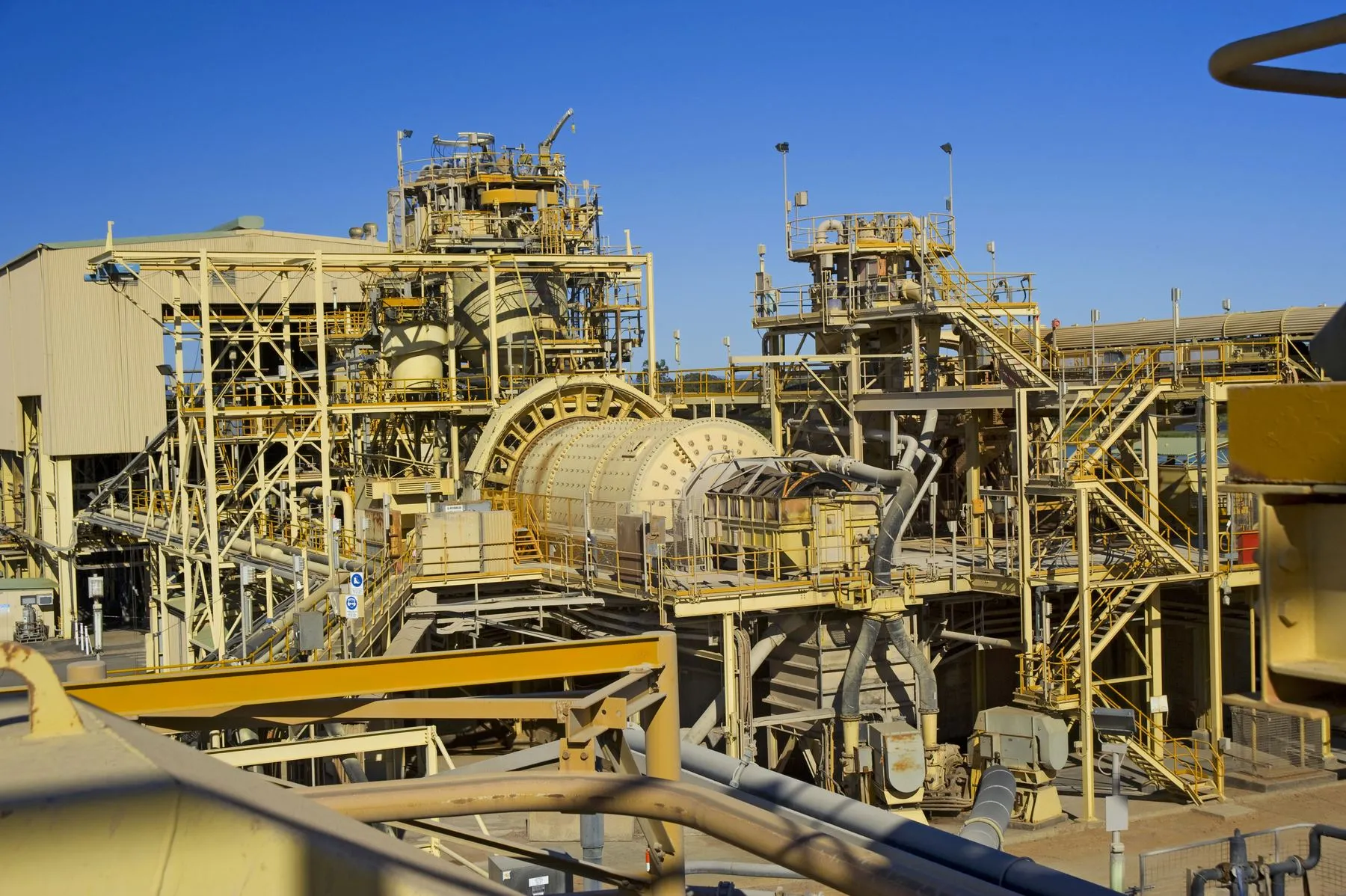
The scope of Plant and Equipment covers a very wide range of assets. It encompasses all tangible, non-real assets — essentially all assets not valued by business or real estate valuers — including assets integral to plant and equipment such as concrete foundations, large steel structures, pipelines, ports, and runways, as well as less significant assets like furniture, fixtures, IT equipment, and other minor items.
Common omissions include installation and commissioning costs, freight and importation on overseas-sourced equipment, ancillary systems such as control panels, compressors and cranes, and demountable structures that sit in the grey zone between “building” and “plant.” Because construction cost inflation — and, where applicable, foreign exchange rates — can be volatile, any values that are not regularly reviewed carry a growing risk of being materially wrong.
The net result: underinsurance in this area leads to protracted claims disputes and threatens balance sheet integrity.
Understanding ISR Policies
Industrial Special Risks (ISR) policies insure “Physical loss or damage (and consequential losses arising therefrom) not otherwise excluded” — the ISR policy therefore combines and expands upon the elements of a standard Business Insurance policy. ISR policies are tailored for larger or multifaceted businesses with physical assets exceeding $10 million. This insurance type offers extensive coverage for high-value assets, encompassing properties, commercial sites, and equipment. An ISR policy primarily caters to two main areas: material damage, which pertains to property, and business interruption.
Unlike a standard business package, an ISR policy does not operate on a simple sum insured. Instead:
-
An ISR policy has a Declared Value — the estimated value of the property insured at the commencement of the period of insurance. As well as being relevant to the test of coinsurance or average, this amount is used for the purpose of premium calculation.
-
It also has a Limit of Liability — the maximum liability of the insurer in the event of loss or damage. This need not and should not be the same as the Declared Value, but should represent what the replacement value of the property would be if, for example, it was totally destroyed on the last day of the period of insurance.
For a CFO, the practical implication is clear: the Declared Value drives your premium and determines whether you are adequately insured. Getting it wrong triggers the averaging clause — which can proportionally reduce any claim payout, even on a partial loss.
Why Underinsurance Exposes Directors
According to Vero’s Attitudes to Risk 2022 report, 46% of large businesses with 200 or more employees and a staggering 57% of SMEs are not fully insured.
This is not simply a coverage gap — it is a governance failure with legal consequences.
The officers and directors of a business have a legal responsibility for the proper management of pure risks. Pure risk is the loss of, or damage to, property or injury or death of persons using the property. It can be accidental or fortuitous, foreseen, or unforeseen. Directors have an overall legal duty and a specific obligation to use care and be diligent in the administration of the affairs of the corporation and in the use and preservation of its assets. Courts have recognised that the failure to effect proper insurance coverage may well be the basis for personal liability suits against the officers or directors of a business. The legal standard of performance is that officers and directors must exercise the care that an ordinary prudent person would exercise under similar circumstances.
When a business is underinsured and a loss occurs, the consequences are immediate:
-
Both Business Insurance and ISR Insurance contain Coinsurance or Average clauses which permit the insurer to reduce the amount of loss if the Declared Value at commencement of the period of insurance is less than 100%, 90%, 85%, or some other specified percentage depending on the insurer’s policy wording and the value of property concerned.
-
Claim settlements are proportionally reduced — even for partial losses
-
The director is left exposed, unable to demonstrate reasonable diligence
Professional Tip: Engage a Certified Practising Valuer (CPV) to ensure your declared values are defensible and current.
Reinstatement, Indemnity, and Optimised Replacement — Choosing the Right Basis
Two primary methodologies are used to value plant and equipment for insurance purposes. A third is increasingly relevant for businesses with older or oversized assets.
Reinstatement Cost The Reinstatement Value method estimates the cost to restore your asset to its pre-loss condition, new for old. This includes potential cost increases during the policy period and lead time after a loss. It offers the advantage of restoring operations to total capacity without concerns about depreciation or wear and tear affecting the claim.
Indemnity Value The Indemnity Value approach calculates the asset’s worth at the time of loss, taking depreciation into account. It provides a realistic assessment of the asset’s value in line with its age, wear and tear, and functional status at the time of loss. This ensures fair compensation and avoids over-insuring, which could lead to unnecessarily high premiums.
Optimised Replacement Cost This approach allows for technological advancement in assets. Under certain circumstances, this method enables the replacement cost of an equivalent modern asset of similar operational capacity to be used — this can lower sums insured, often materially. It is most appropriate where an existing facility is oversized, outdated in layout, or would not realistically be rebuilt to its current configuration after a loss — for example, a dated multi-level processing plant that would be replaced with a modern single-level equivalent. For directors and brokers, ORC can prevent overpaying premiums on assets that would never be rebuilt to their current scale, while still ensuring full coverage for the functional capacity the business actually requires.
Insight: The appropriate methodology depends on the facts and circumstances surrounding the assets, the company’s asset strategy, and the specific ISR policy wording. Members should consult with their valuer prior to selecting a basis.
Technical Provisions in an Audit-Ready Report
A compliant insurance valuation is not simply a list of asset values. Each of the following must be addressed to ensure the report stands up at claim time and satisfies audit scrutiny:
-
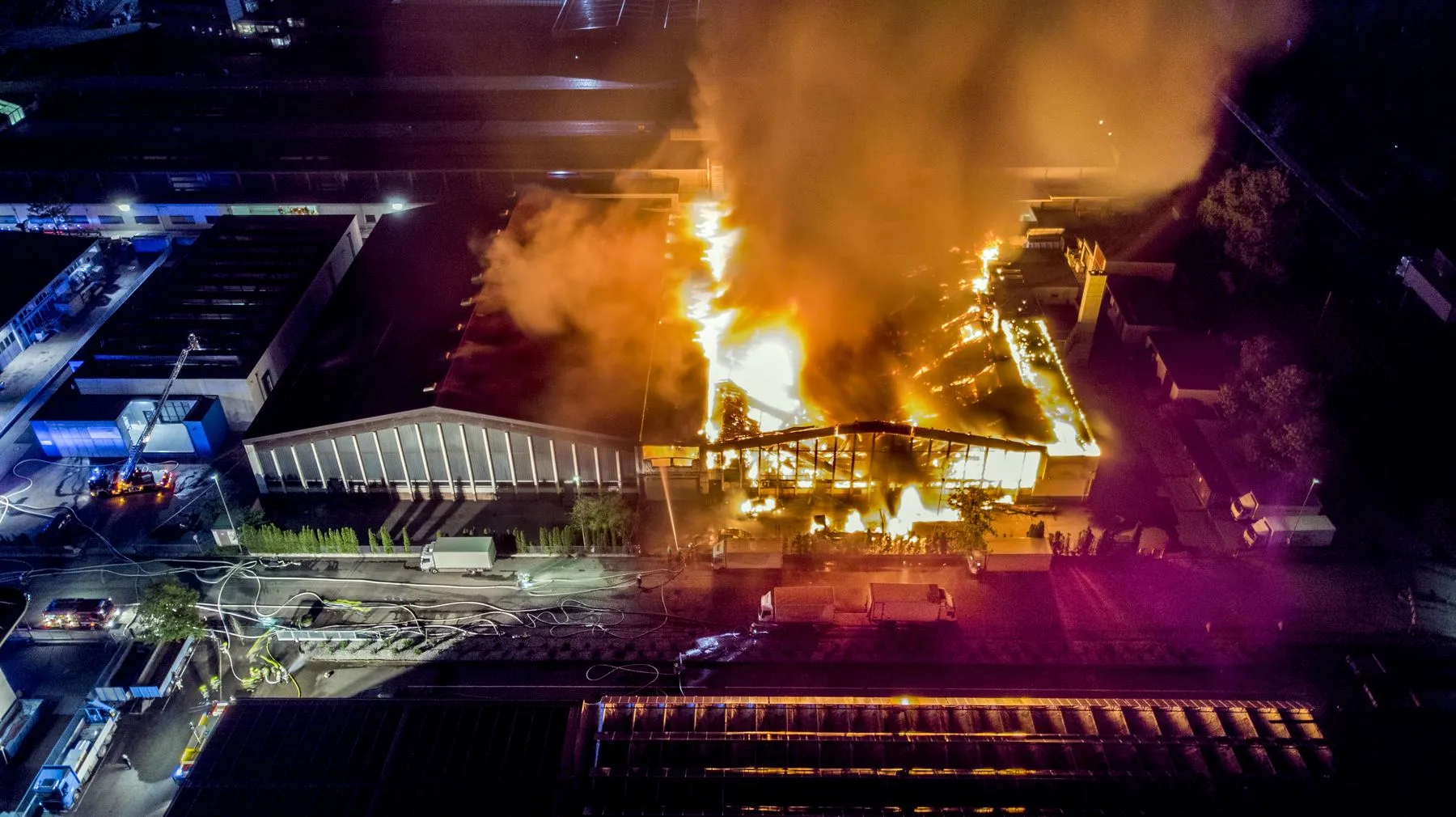
Demolition and debris removal — At times, the local council tip will not be able to handle all the debris from a building due to either the content (asbestos) or bulk. This may incur very large costs where debris must be removed by specialists. Always ensure that the insurance limit adequately reflects the cost of disposal — as a rule, 10% of the value of the asset would be a minimum, though this varies dramatically depending on factors such as the height and construction of the building.
-
Inflationary cost allowance — The valuation must include separate allowances for cost escalation during the policy period (typically 12 months), plus cost increases anticipated during the lead time and reconstruction period. Construction costs can escalate significantly, particularly following a large-scale event.
-
GST (inclusive/exclusive) — Valuations should clearly state whether the values reported include or exclude Goods and Services Tax (GST) and consider the eligibility of the insured party to claim GST as an input tax credit. A mismatch with policy wording creates claims ambiguity.
-
Interest During Construction (IDC) — Considering the financing costs that may arise during the reconstruction period is important. The insured may incur financing obligations while assets are being rebuilt and are not yet productive — these costs must be explicitly addressed.
-
Lead times for rebuild and asset delivery — The indemnity period should be long enough to provide for planning, tendering, approvals, construction, and letting in the event of destruction. Lead times for specialist plant and equipment — particularly imported or custom-built assets — can extend to 12 months or more and must be factored into coverage.
-
Professional fees — The valuer should be instructed to prepare the valuation so that it accords precisely with the basis of insurance and includes costs of demolition and removal of debris and professional fees. This covers architects, engineers, quantity surveyors, and legal advisers involved in the reinstatement process.
-
Installation and commissioning costs — For plant and equipment specifically, installation and commissioning can be a substantial cost and are frequently overlooked in self-declared valuations.
-
Extra costs of reinstatement (statutory compliance) — The policy should include the extra costs of reinstatement, which is the extra costs incurred to comply with any requirement of any Act of Parliament or Regulation, By-Law, or Regulation of any Municipal or other Statutory Authority.
Callout: Neglecting any one of these provisions can lead to underreporting and material claims shortfalls — even where the core asset values are correct.
Transferring Risk and Accountability
A professionally issued insurance valuation does more than satisfy a compliance checkbox. It is a governance instrument.
When a Certified Practising Valuer issues a valuation report, directors transfer the risk of reporting accurate sums insured to the valuer. By doing so, directors strengthen their company’s financial resilience and commitment to ethical business practices, safeguarding stakeholders’ interests.
In practical terms: without a CPV, the director personally carries the risk that sums insured are wrong. If the business is underinsured and a loss occurs, the averaging clause can reduce the payout — and the director may face personal exposure for the shortfall. When a Certified Practising Valuer signs off the declared values, the evidential burden shifts. The director has demonstrated reasonable reliance on an independent, qualified professional — creating a clear, documented defence that they acted diligently and prudently.
A defensible, certified valuation supports your position with insurers, auditors, and the board.
Benefits include:
-
Transfer of duty of care from the board to the valuer
-
Reduced exposure during audits or claims
-
Demonstrated proactive governance aligned with corporate obligations
-
Satisfying due diligence requirements, conforming with best practice, and facilitating corporate governance